

Behind simple tools lies a demanding craft: a hook, a plant fibre and thousands of stitches to regulate precisely. The artisan prepares an uneven material, maintains tension, reads the volume and corrects the line without losing rhythm. Her mastery is measured as much in endurance as in her eye.
Preparing the fibre before crochet
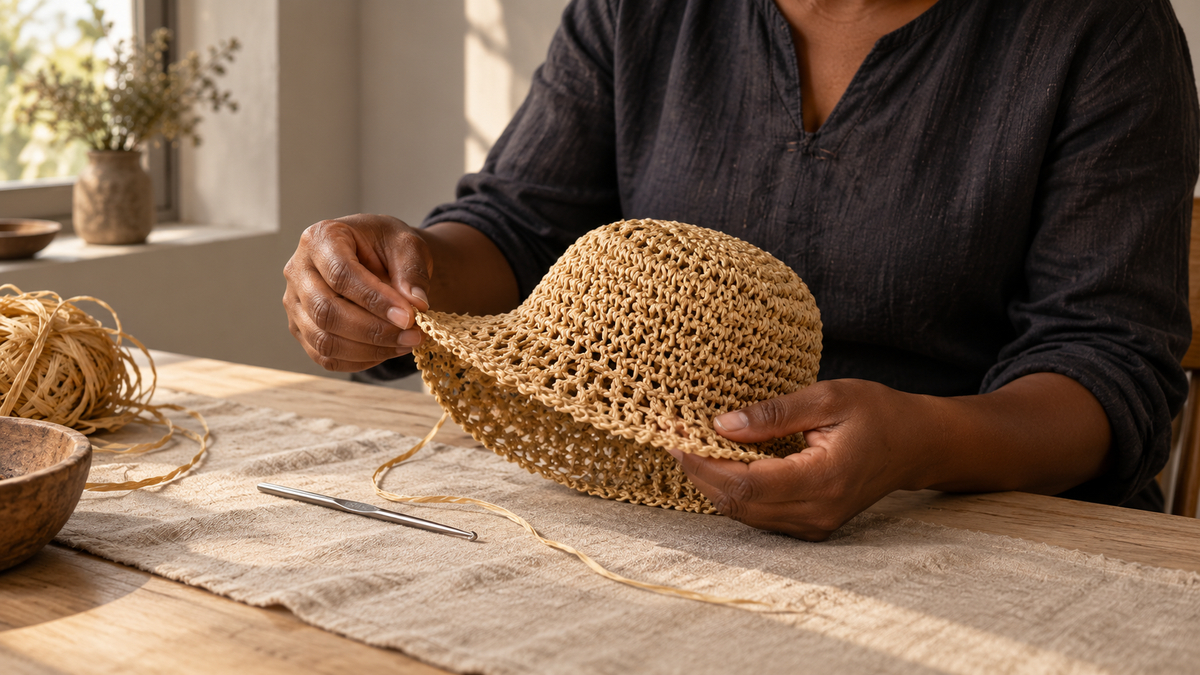
Before crocheting, the artisan grades the available fibres, splits strips that are too wide and softens them where needed. She chooses a hook suited to the stitch and the desired result, adapting preparation to the fibre’s condition at the time.
Both hands work together to guide the fibre, shape the loop and regulate pressure. A change in movement immediately affects density.
Watching the form emerge through the rows
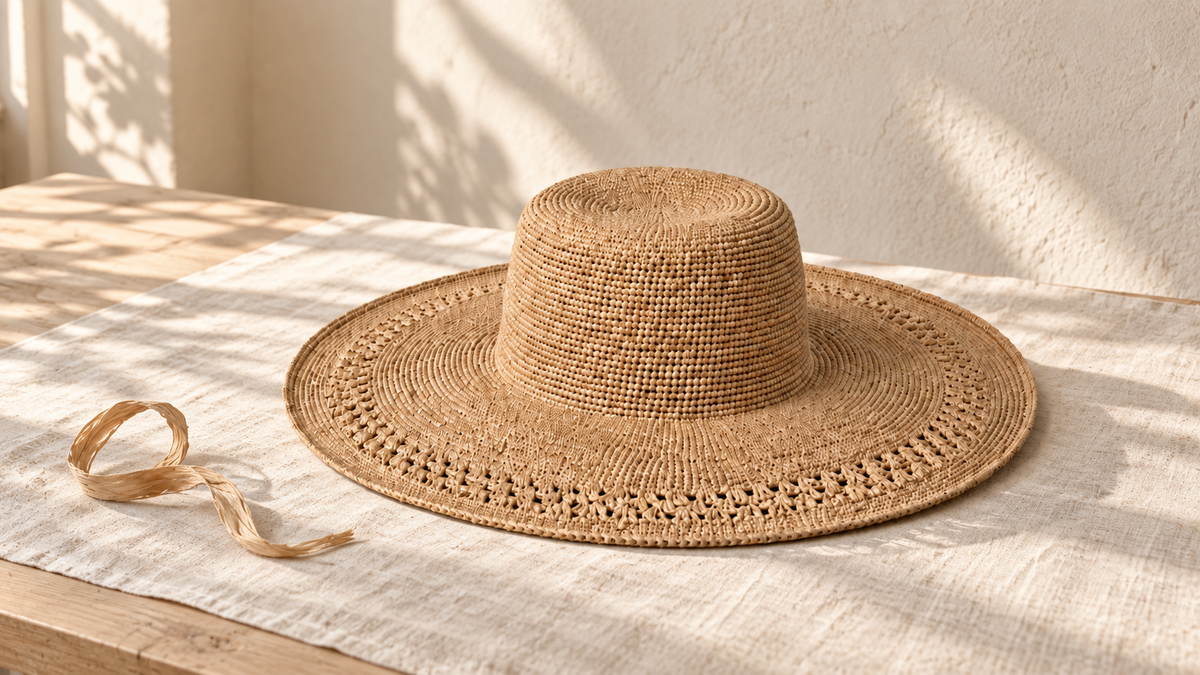
A hat is built from a centre and widened through increases. The crown then requires a precise transition, followed by a brim whose breadth depends on how many stitches are added. The artisan counts, watches tension and feels the fibre respond beneath her fingers. She observes the emerging volume.
The design provides dimensions and reference points. The fibre may call for an adjustment to preserve the same silhouette despite a difference in width.
Maintaining precision over several days
In MAREVAKA’s partner workshops, a single piece may take several days, depending on its volume and stitch density. Consistency must withstand fatigue and pauses. The artisan recovers her tension after each interruption and checks measurements regularly.
Sustaining this duration without losing precision is a skill in itself. Dense work puts demands on fingers and wrists. The working rhythm must allow accuracy without placing excessive strain on the hands.
Looking, correcting, finishing
After the final stitches come the joins, shaping and checking of the outline. Joins are secured, ends integrated and the form examined from several angles. A small correction can rebalance a brim or curve.
The final check brings together technique and judgement. The piece follows a design while carrying the quiet signature of the hand that built it.