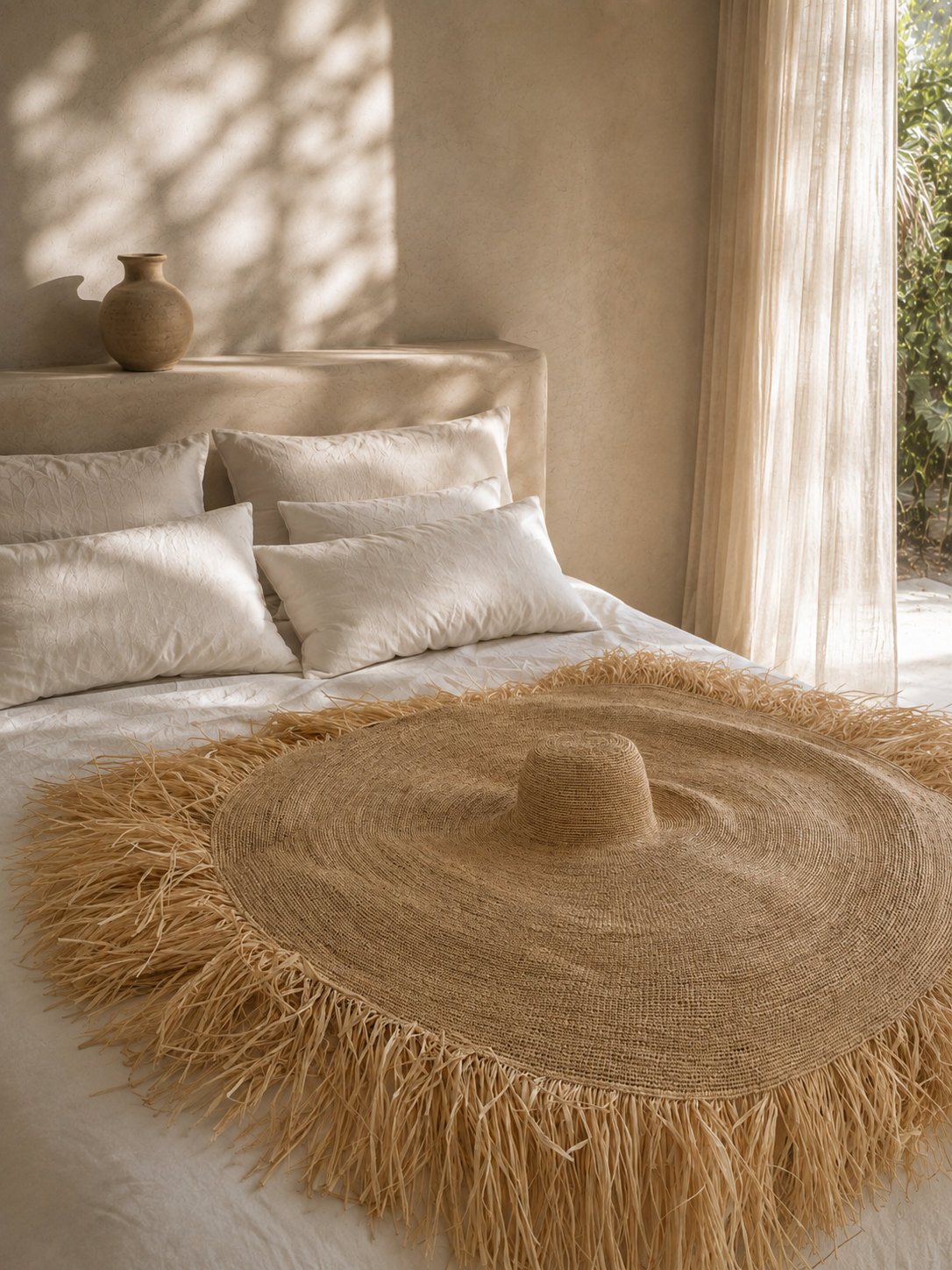
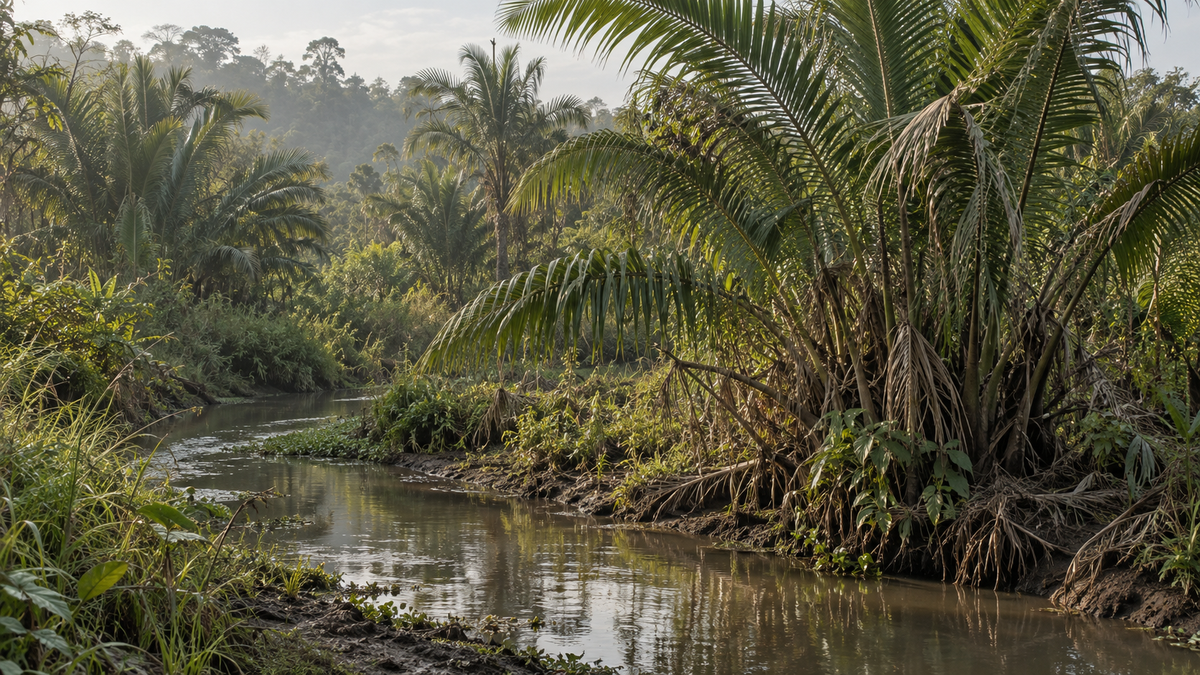
In Madagascar, raffia connects wet landscapes, long-established uses, markets and workshops. MAREVAKA places its pieces within this living continuity, without reducing the island’s diversity to a single image.
Where the raffia palm grows in Madagascar
The botanical distribution of Raphia farinifera includes the island’s north and east. These humid regions contrast with the highlands and the arid south. Speaking about Malagasy raffia therefore means keeping Madagascar’s geographical diversity in mind.
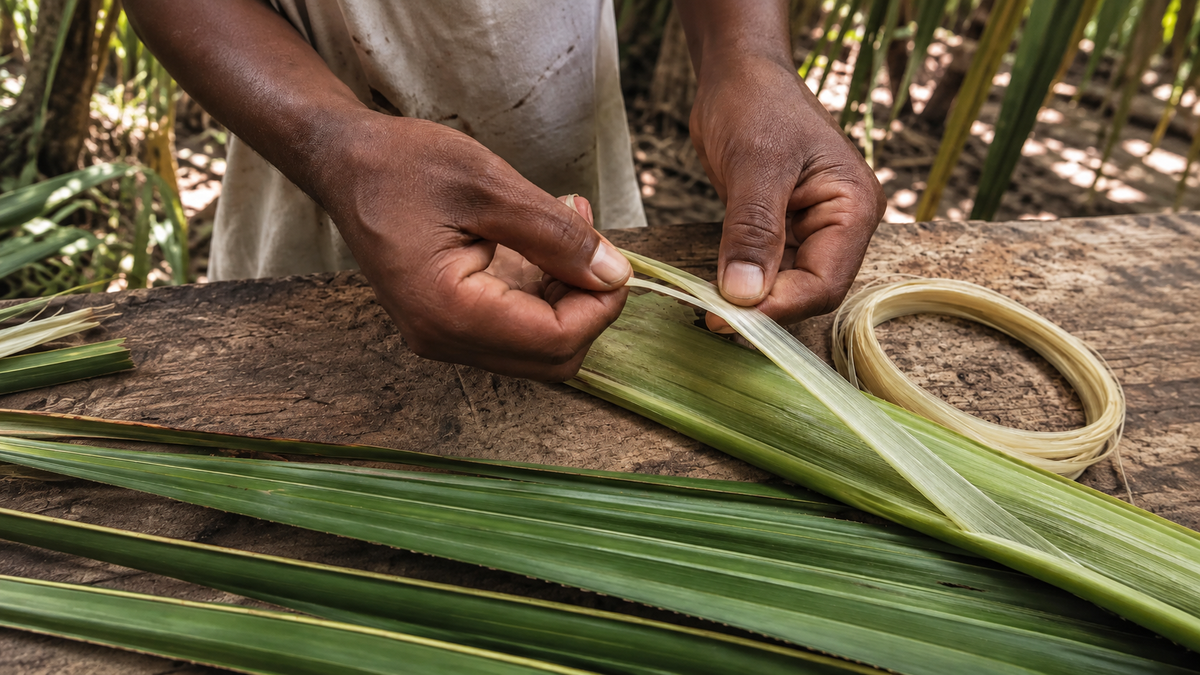
The palms grow close to water and are often associated with inhabited areas. Gathering the fibre involves real journeys, seasons and local knowledge.
A material rooted in everyday life
Raffia serves a variety of craft and practical uses. The FAO documents its use, alongside bamboo and mangrove wood, in the valakira, a traditional fishing device on the north-west coast.
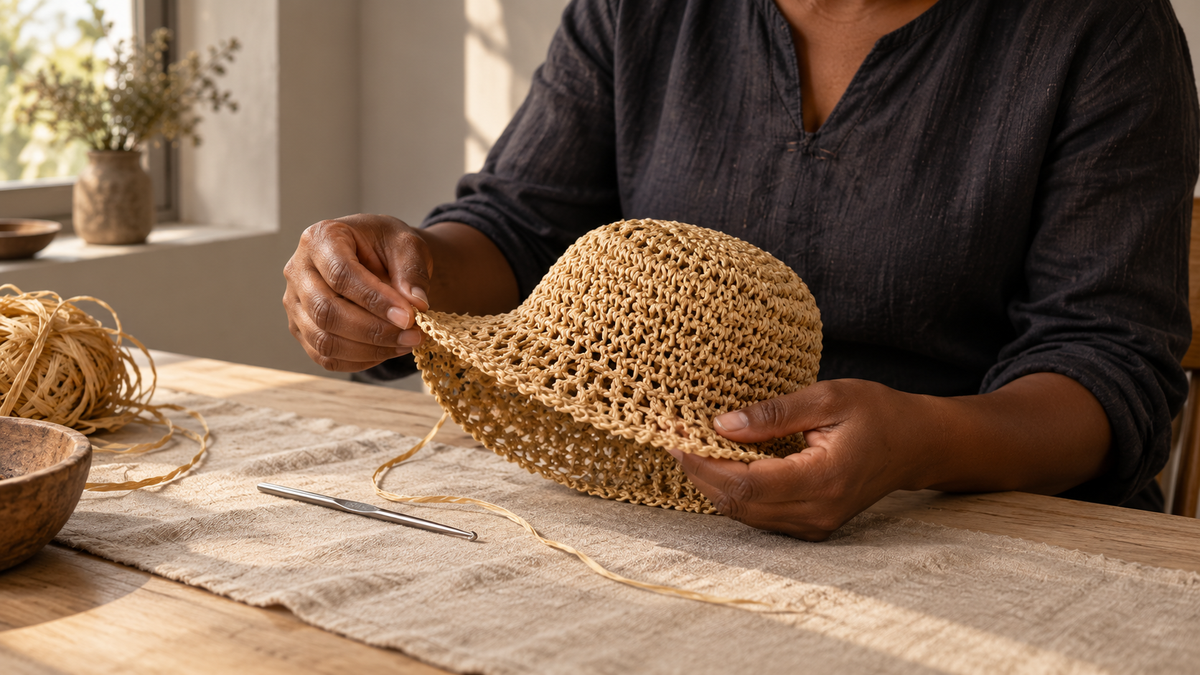
Contemporary craft draws on this history of gestures and uses while developing new forms. Crochet makes it possible to build both supple and structured shapes.
Skills passed from hand to hand
Learning a craft often involves observation, repetition and correction alongside an experienced maker. Thread tension, the placement of increases and an understanding of a curve are not acquired in a single gesture. The hand builds its own memory.
In 2023, a four-month basketry course in northern Madagascar enabled twenty-two women to gain skills and a starter kit. This example, documented by UNESCO, illustrates the role vocational training can play; it does not specifically describe raffia crochet.
Creating between two lands
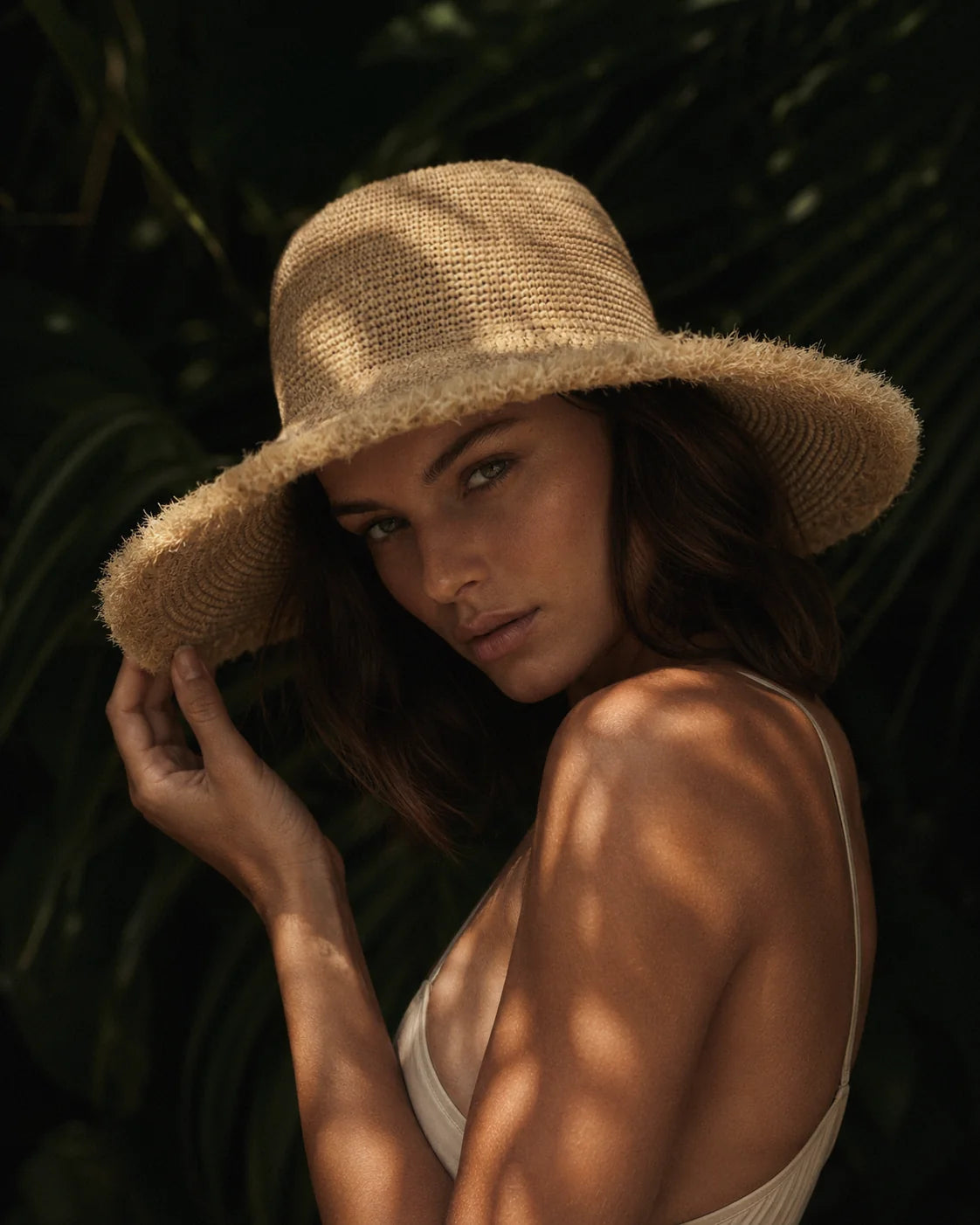
MAREVAKA designs its silhouettes in France and has them handmade in Madagascar. This distance calls for precise dialogue about form and leaves the making process the time it needs. The result is contemporary design whose material and craftsmanship remain deeply connected to Madagascar.