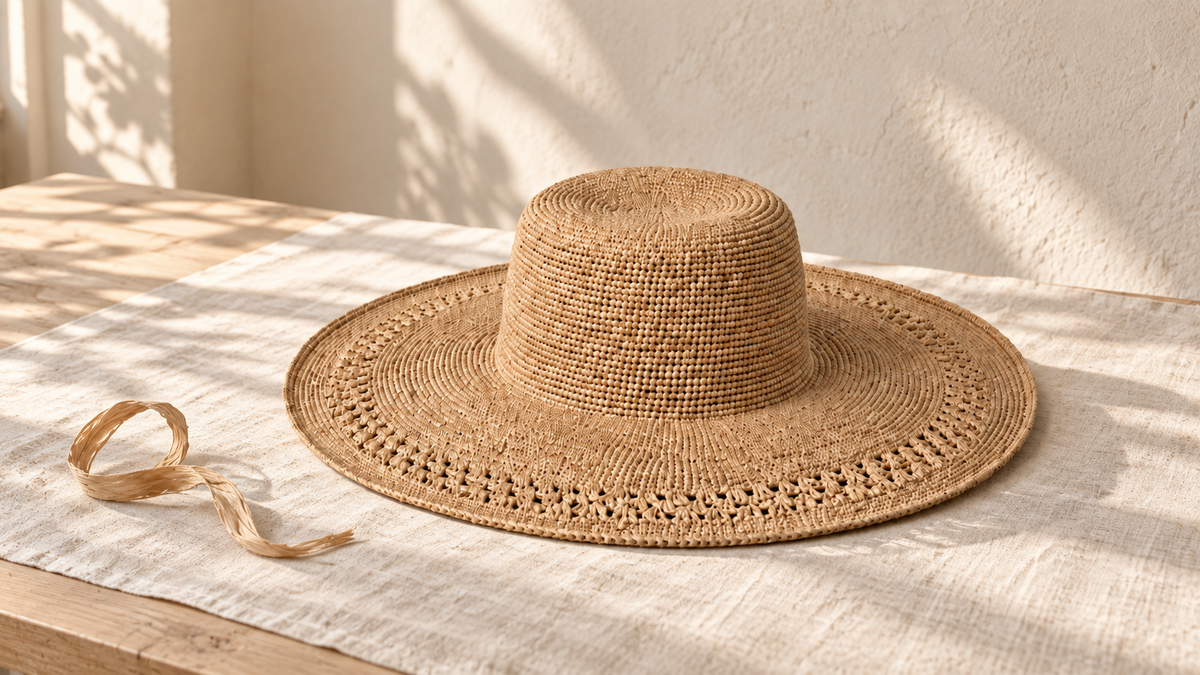

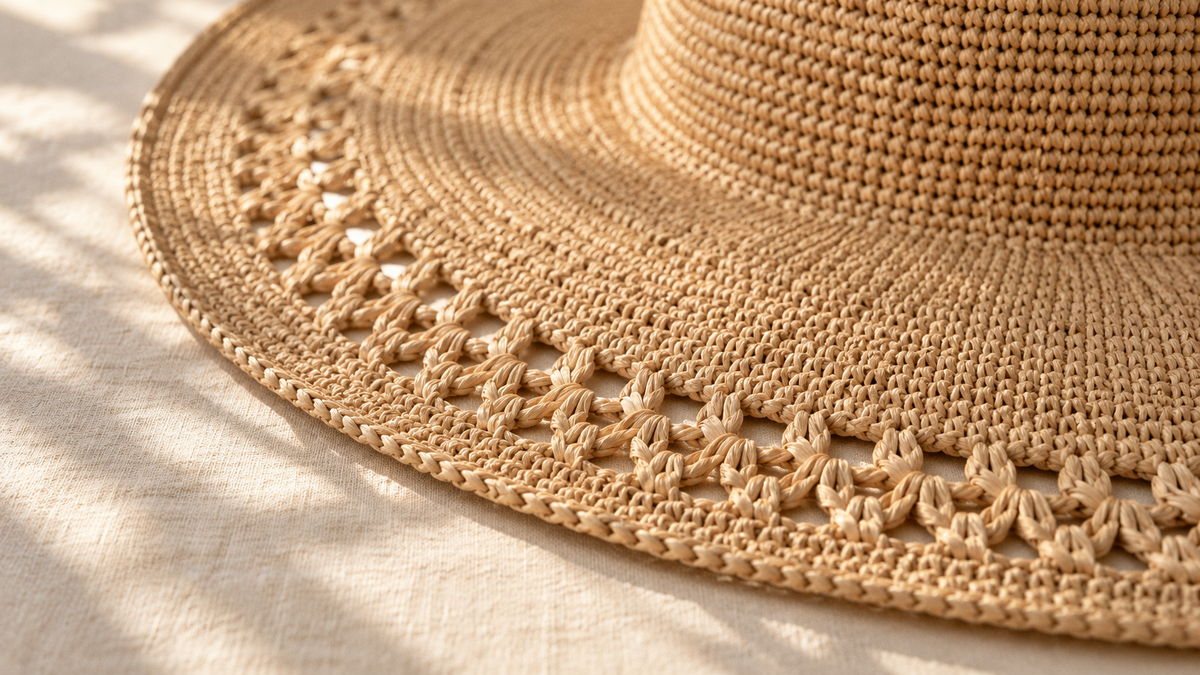
The chain stitch is often the first gesture learned, and already a test of consistency. Repeated, it becomes a chain; within a row, it adds height or leaves a passage for light. With raffia, the smallest change in tension becomes visible.
Making an even chain
Each loop must allow the next to form without gripping the hook. A chain that is too tight shortens the starting edge and distorts later rows. Too loose, and it creates uneven openings.
Raffia’s limited elasticity makes every change in tension immediately visible and difficult to correct. The hand needs to find the right rhythm from the first stitches.
Starting the row at the right height
At the beginning of a row, one or more chain stitches may bring the active loop to the height of the next stitch. The number depends on the stitch used and the pattern instructions.
In circular work, this rise needs to blend in discreetly. Too much height creates a small opening, while too little pulls on the edge.
Creating openwork
When a chain spans several stitches before being attached again, it creates a space. Repeating these arches produces networks, fans or geometric patterns. Light can then pass through the work.
The chains must remain a consistent length for the openings to match. The fibre’s weight and the piece’s future use are taken into account.
A demanding simplicity
The chain stitch is often the first learned, yet it remains visible in the most elaborate patterns. Its regularity immediately reveals the quality of the tension.
In raffia, it offers a valuable contrast to dense stitches. A small amount of material can create rhythm and lightness.