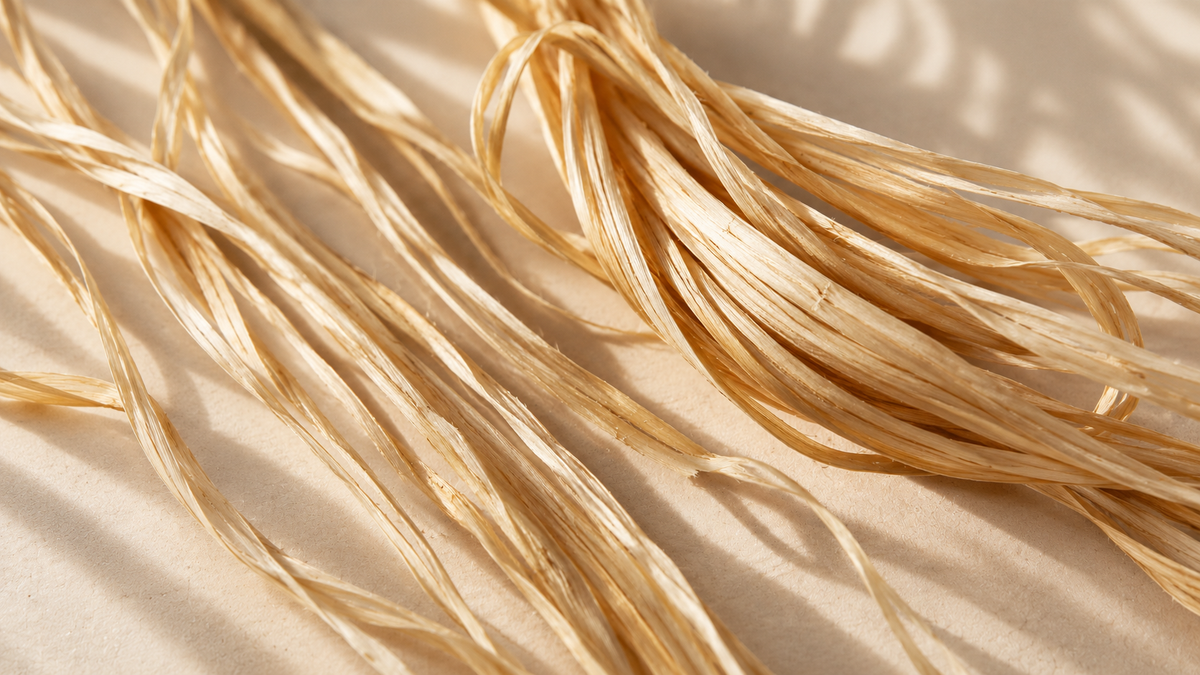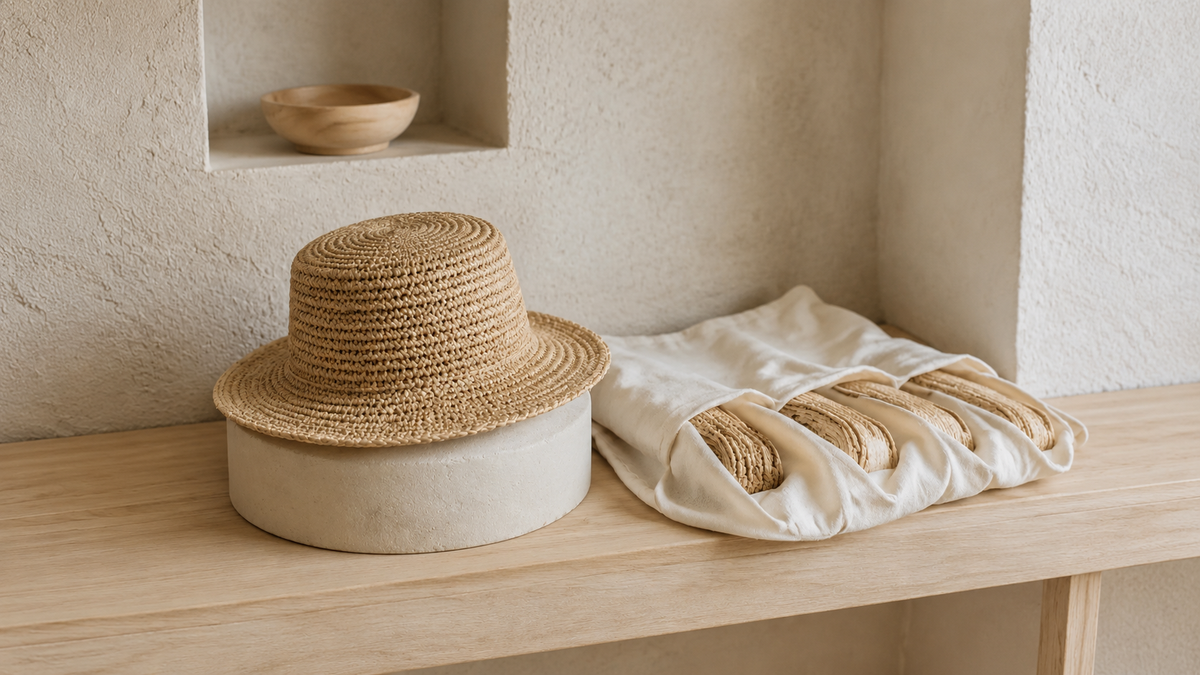

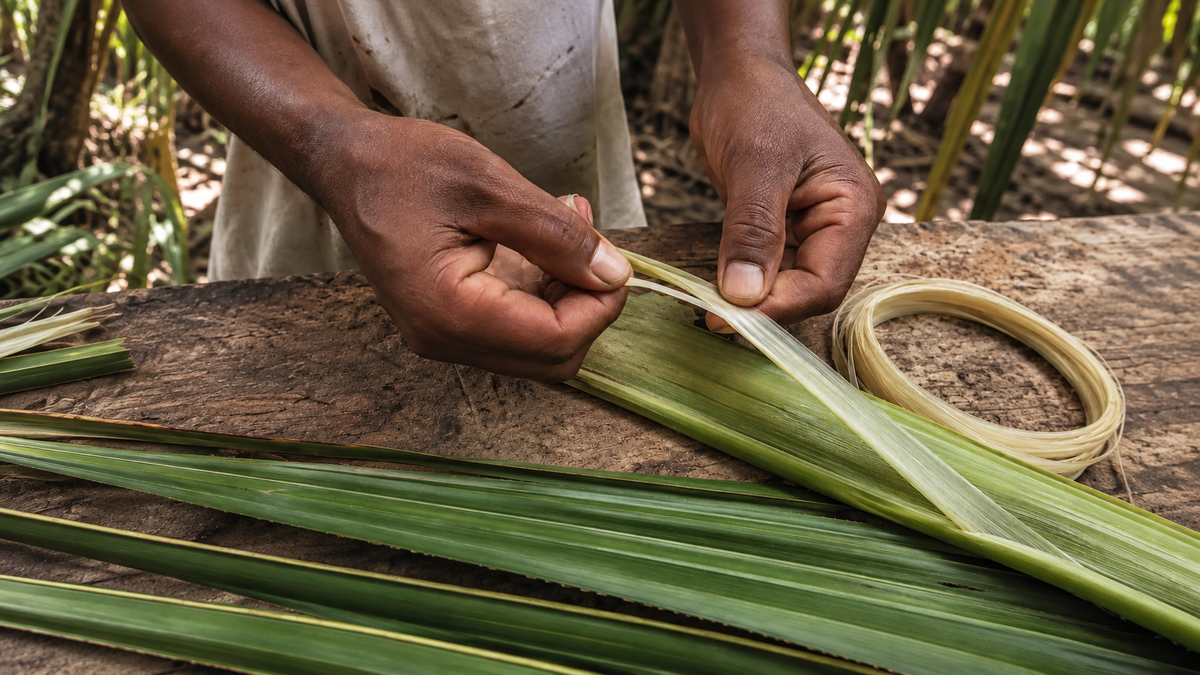
Between the leaf and the ribbon comes a succession of slow, precise gestures. A hand lifts the membrane at just the right point, follows the direction of the fibres and works to preserve its full length. Raffia’s fineness begins in this fragile continuity.
Choosing the leaf at the right moment
A young leaflet has a surface supple enough to yield a continuous strip. Choosing the right stage for harvesting is not simply a matter of a theoretical age: it depends on the leaf’s actual condition and the knowledge of the people selecting it.
The choice is made from the leaf’s condition at the moment of harvest. It varies with the palm, its health, the season and its surroundings. Harvesters look for tangible signs. Colour, suppleness and the opening of the leaf offer clues that only regular practice teaches them to read closely.
Removing the fibre along the leaf
The fibre is removed lengthways along the leaflet to keep the strip continuous. A study of Raphia textilis, a species distinct from Raphia farinifera, describes fibre taken from the epidermis of a young leaflet and examines its microstructure. It offers a point of comparison, without allowing all its properties to be extrapolated to Malagasy raffia.
Width naturally varies from strip to strip. It depends on the leaflet and on how the membrane is first lifted. Subsequent sorting brings together fibres suited to different uses. The finest lend themselves to details. Wider strips can be split or reserved for areas that need more material.
Slow, even drying
Once removed, the strip must dry completely before storage. In the workshop, gradual drying with good airflow is preferred, so that no fibre is put away while still damp.
The finished colour remains varied, from plant ivory to a deeper golden shade. These differences may come from the leaf and its preparation. The fibres are then sorted by eye to bring harmony to the work without removing their natural nuances.
Preparing the strip for crochet
Before it becomes a stitch, raffia is sorted, sometimes split and gently softened. Joins are planned and distributed to keep the surface even. The fibre passes between the fingers slightly damp and free from compression. An even stitch depends as much on this preparation as on handling the hook.
Because it uses few tools, this preparation may seem simple. Yet it requires a succession of precise decisions. At every stage, a mistake can shorten, weaken or stain the strip. A ribbon ready for use already holds a great deal of work before the first stitch is made.