
The word raffia names both a palm and the pale fibre taken from its young leaves. Between the two lies a whole world of skilled work: selecting, peeling, drying, sorting and softening. Before it becomes a material for making, raffia is a plant, a landscape and human endeavour.
Raffia, a palm of wet tropical regions
Palms of the genus Raphia belong to the Arecaceae family. They grow in tropical regions where water is available, particularly beside rivers, in wetlands or in consistently moist soils. Their distinctive silhouette is crowned with very large leaves, each made up of many leaflets arranged on either side of a central axis.
In Madagascar, Raphia farinifera is among the species documented by botanists. Kew Science records a native range encompassing tropical Africa, the Comoros, and northern and eastern Madagascar. To speak precisely about raffia, we need to distinguish the botanical genus, which includes several species, from the fibre sold under a common name.
The fibre comes from the leaf
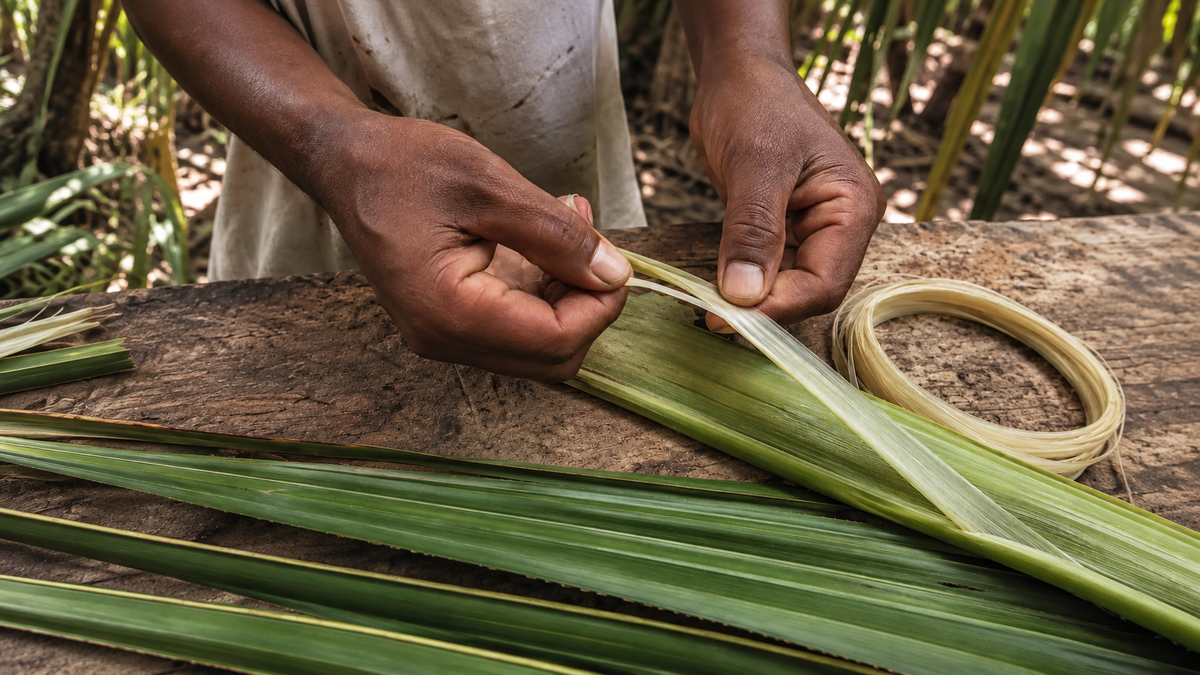
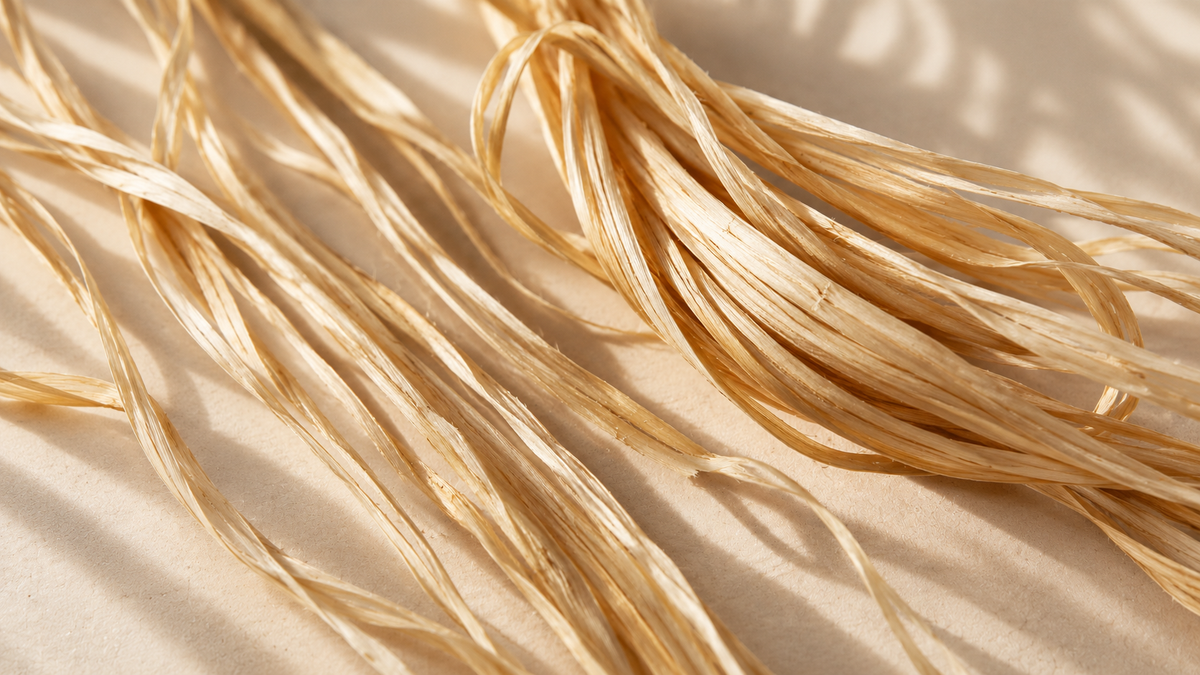
Raffia used in craft comes from a thin surface layer of young leaflets. It is distinct from the palm’s wood and from spun fibres such as cotton. This membrane peels away in long strips while the leaf is still supple enough to work. Once dry, the strips acquire their straw-like appearance, lightness and characteristic feel.
Quality depends on the leaf’s stage of development, how cleanly the fibre is removed and how it is dried. An even strip is easier to prepare for crochet. Variations in width and shade reflect both the plant’s growth and the handwork that has made the fibre usable.
A fibre ready to take shape
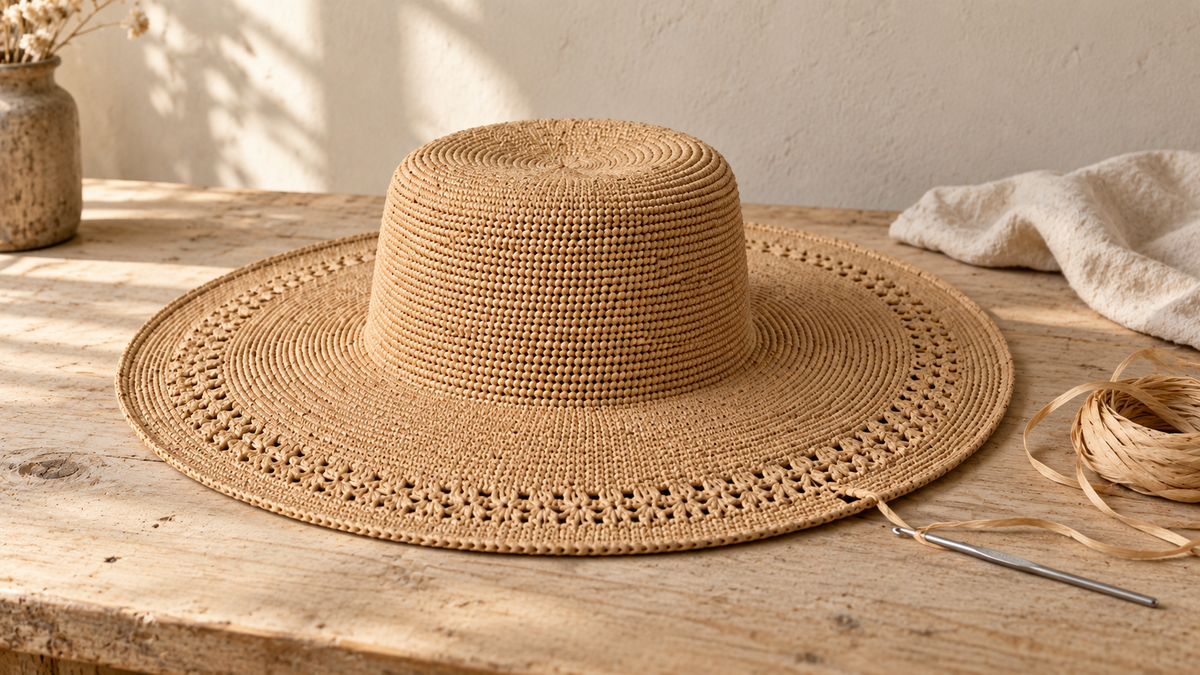
A raffia strip can be split, lightly moistened and guided around a crochet hook. Its combination of flexibility and body allows volume to be built without a heavy framework. Double crochet produces a dense surface; openwork lets air and light through. From a very simple material, the hand can vary texture, curve and firmness.
Raffia remains sensitive to water, sharp creases and excessive friction. Its appeal lies in this balance: it holds the curve given to it by hand while retaining a little flexibility. A well-made hat can be firm through the crown and more fluid at the brim.
A material with many uses
Long before it entered fashion collections, raffia was used for binding, covering, joining and crochet, and for making baskets, mats and everyday objects. Other parts of the palm have also found distinct local uses. To see the plant simply as a decorative material would overlook this rich history. It belongs to landscapes, economies and traditions of skilled making.
At MAREVAKA, this material history continues in pieces designed in France and handmade in Madagascar. The fibre’s subtle shades and texture remain visible, giving each piece a character of its own.