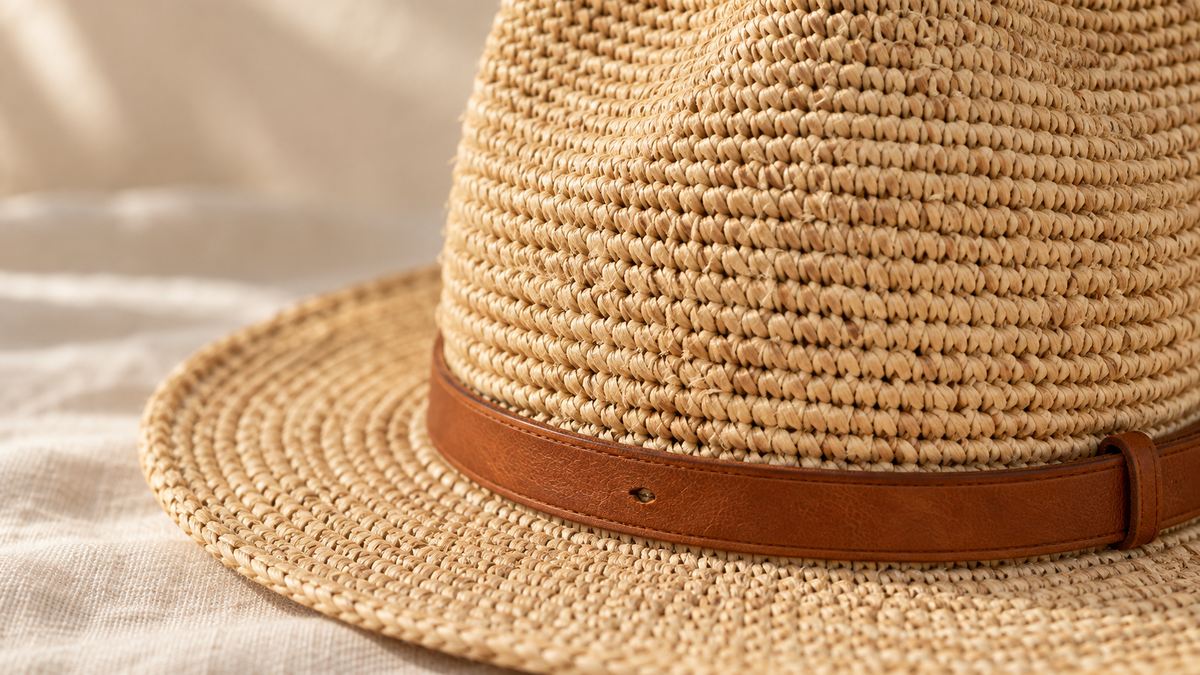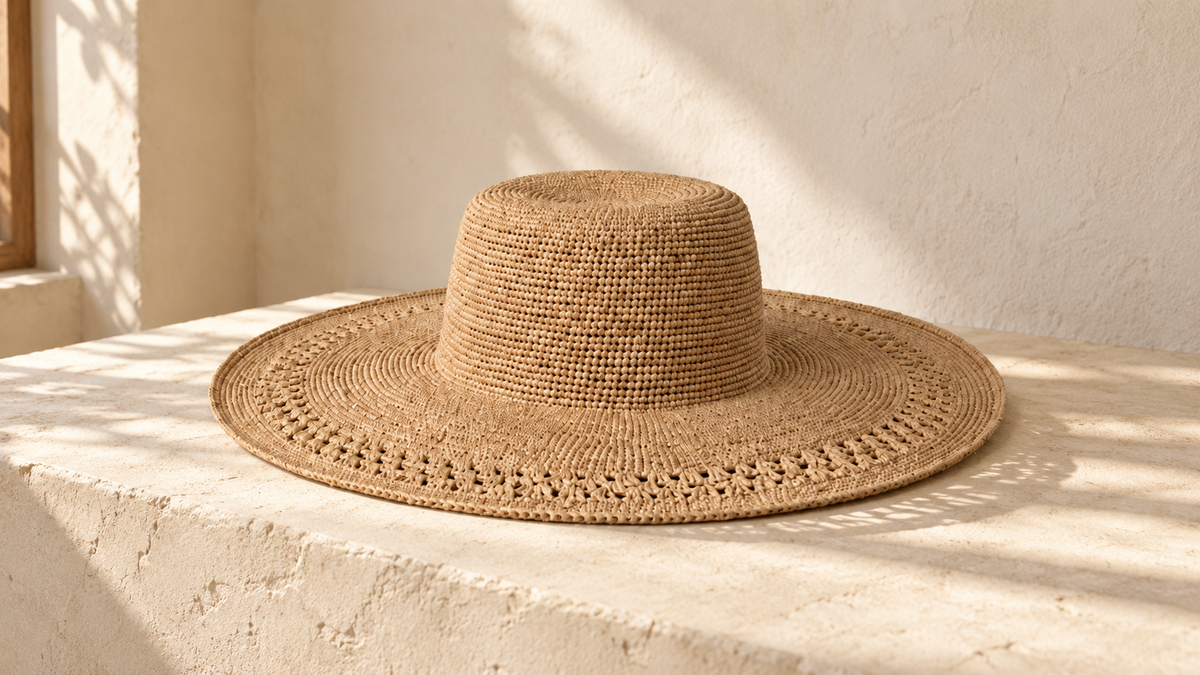


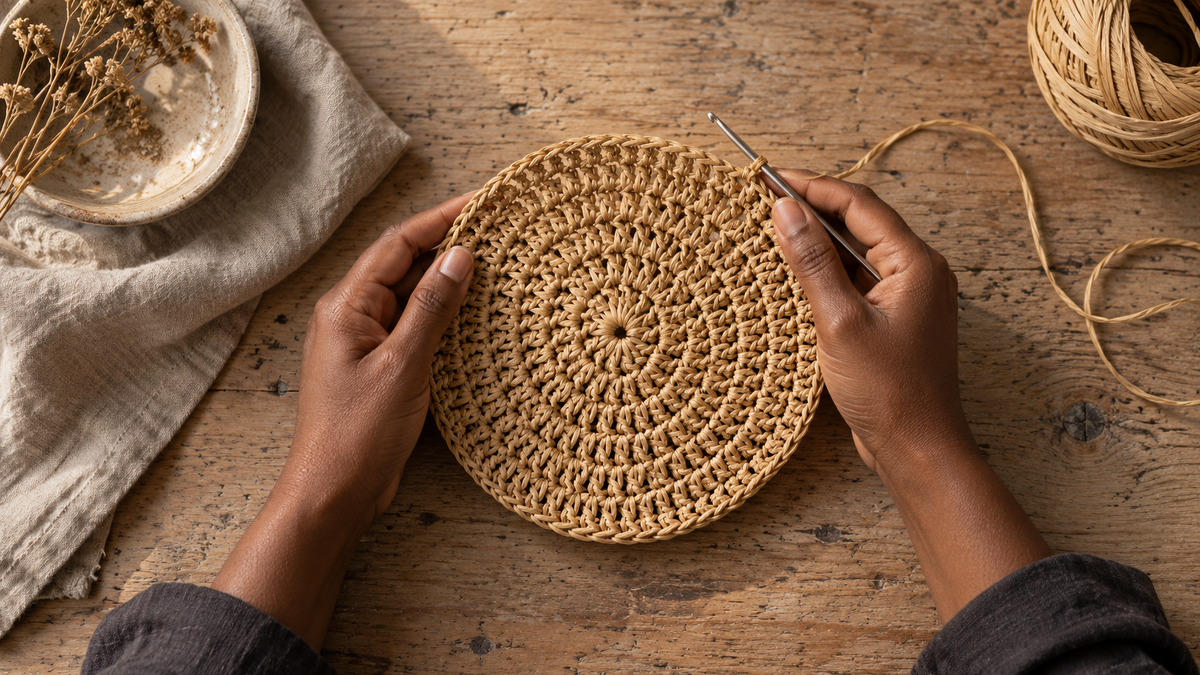
It can all begin with a few stitches gathered at the centre. Depending on the rhythm of increases, the circle stays flat, rises or becomes a wall. Crochet in the round brings the form into being, one round at a time.
The first stitches at the centre
The centre needs to be tight enough to stay neat without forming a hard lump. The first stitches are distributed around the ring. Their number depends on the stitch and how quickly the circle needs to widen.
Raffia adds thickness quickly. Too many stitches or increases make the circle ripple; too few make it cup and rise.
Working in a spiral or joining each round
In a spiral, the work continues without a visible join. A marker indicates the beginning of the round. In joined rounds, a slip stitch connects the last stitch to the first, then chains bring the hook to the height of the next row.
A spiral gives gentle continuity. Joined rounds make certain patterns and stitch changes easier. The design guides the choice.
Distributing the increases
To keep a circle flat, the stitch count increases regularly. If additions always fall in the same place, corners appear. Staggering them softens the outline.
When increases slow down, the surface starts to rise and form a wall. The top of the hat begins to become its crown.
Checking the form as the rounds progress
The diameter is measured throughout. The work is laid flat or placed on a form to identify rippling or tightening early.
Undoing a few rows is sometimes the best correction. Raffia remembers an error in geometry even if the hand later tries to force it into shape.