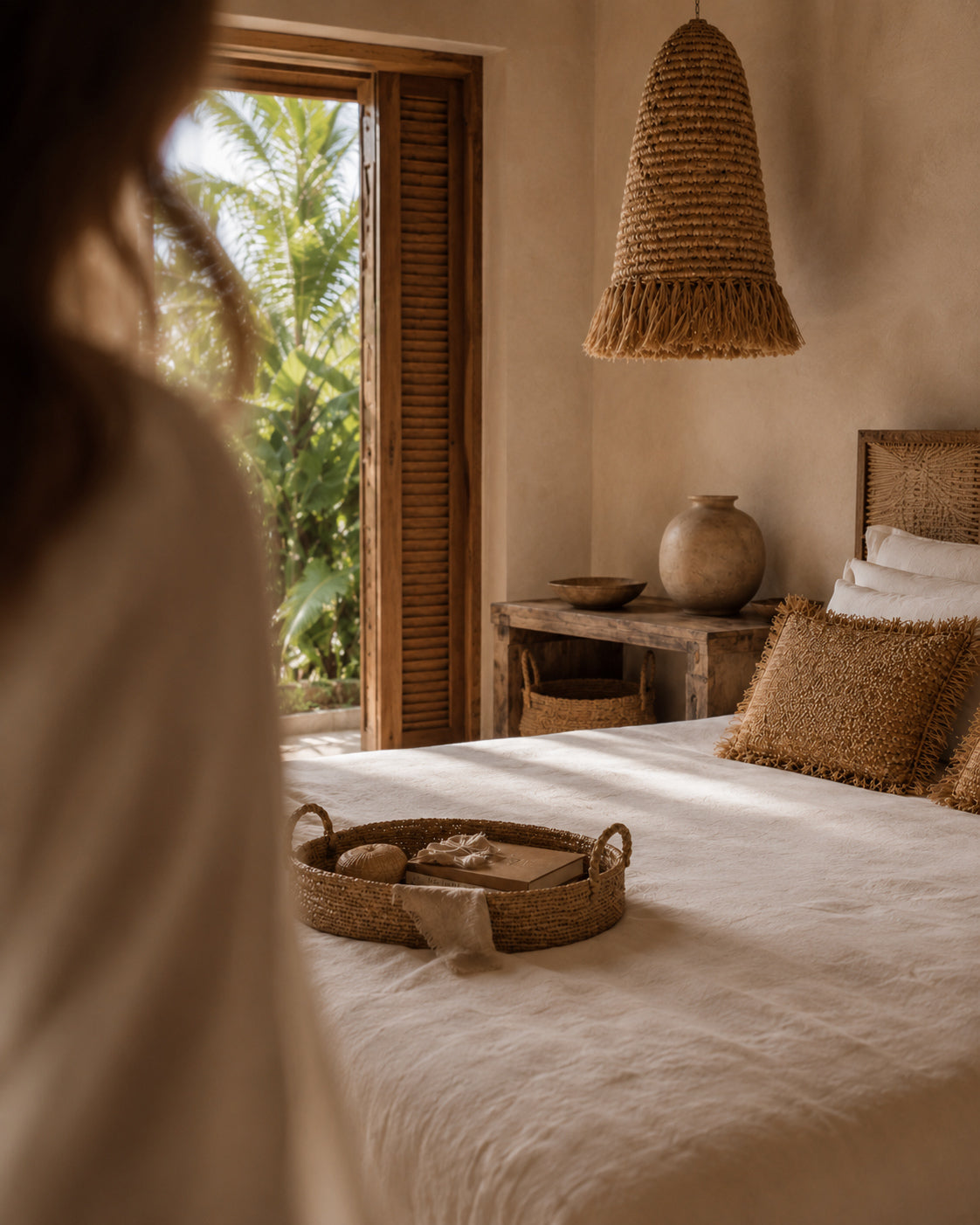

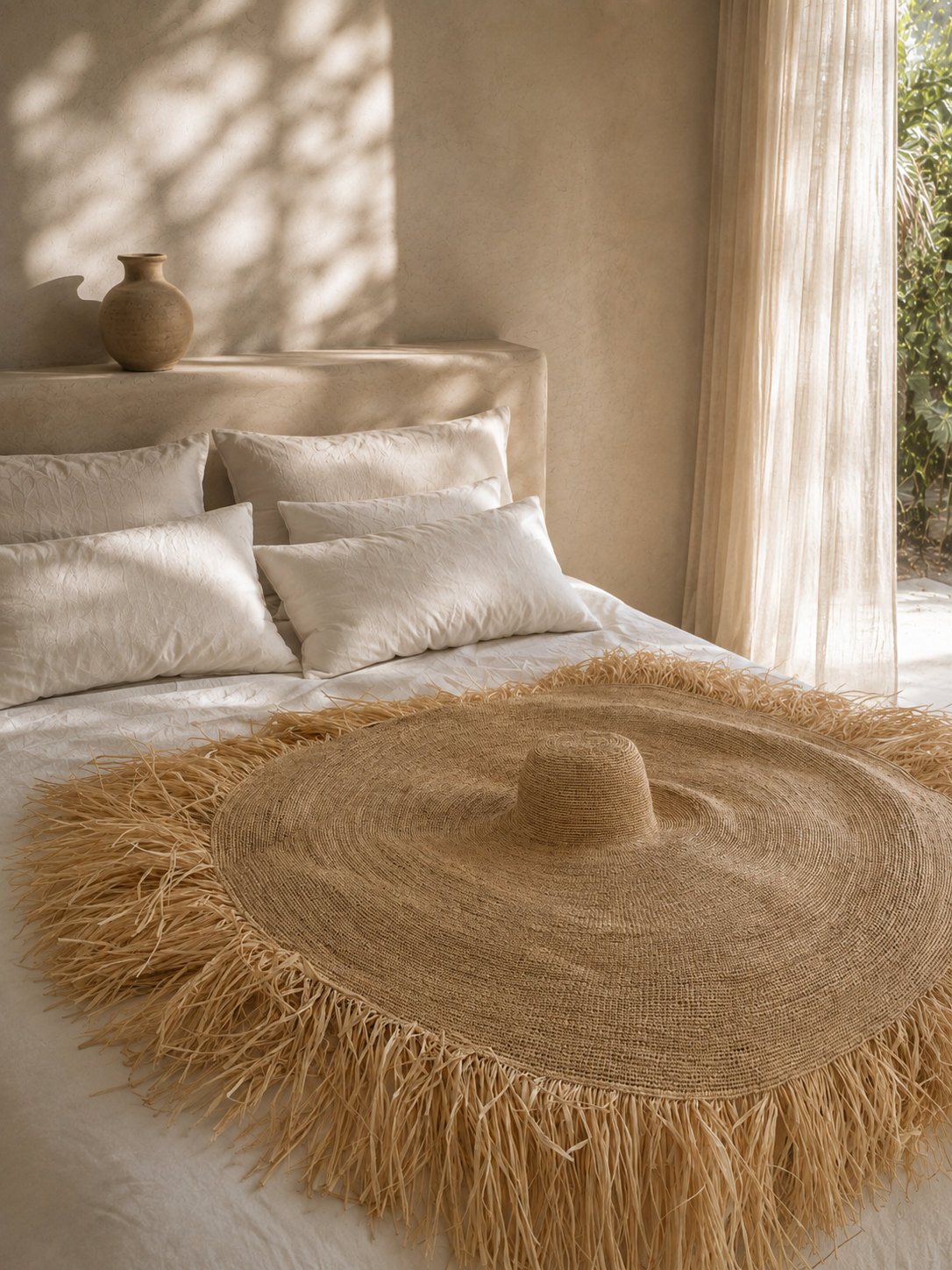
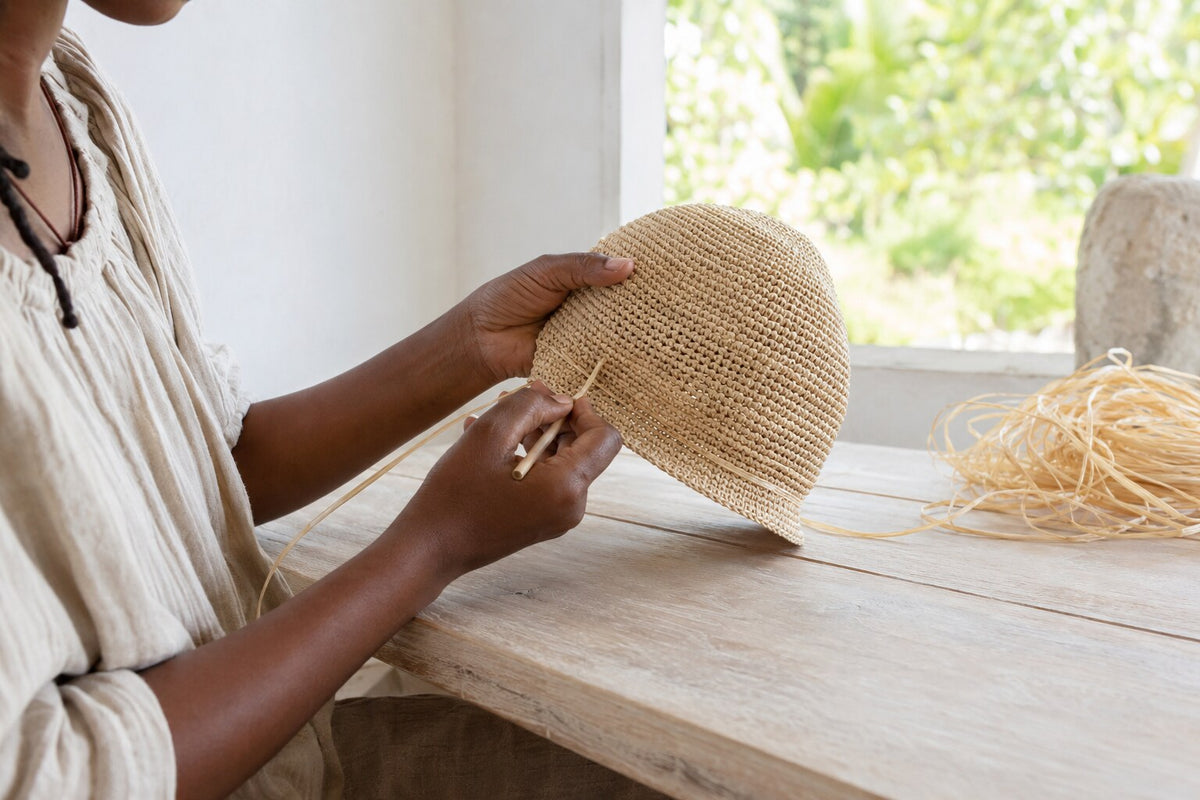
At MAREVAKA, small batches follow from the time of the hand and the fibre actually available. They match the rhythm of manual work, the scale of an independent House and a sustainable pace for the workshops. This scale allows attention to every detail.
Respecting the time of the hands
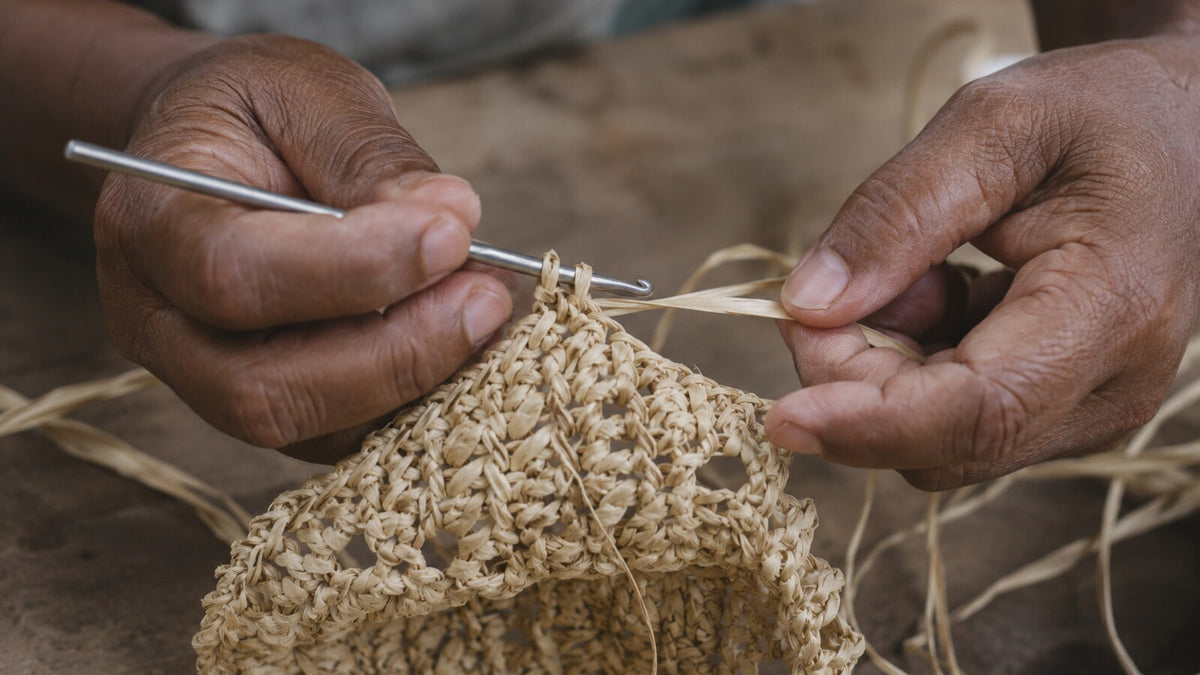
Crochet advances stitch by stitch. A generous form, a dense stitch or an openwork pattern calls for time, concentration and consistent tension. That time is fully part of the piece’s quality.
A sudden rise in volume would put pressure on the workshops’ pace and weaken the attention given to each piece. MAREVAKA prefers growth that remains compatible with the reality of making.
Making in measured quantities
Small batches allow quantities to match production capacity and real demand. They avoid making more than needed while leaving room to replenish designs that find their place.
Stock risk remains and is managed through measured quantities. It stays at a scale consistent with an independent House’s resources and the value of handwork.
Refining designs from one batch to the next
An initial production reveals what a drawing leaves unresolved: how a handle sits, how a brim follows movement and how proportions behave when worn.
These observations inform the next batch. The design keeps its identity while its execution becomes more precise. Quality grows through attention refined at every stage.
Rarity shaped by making time
Rarity has value here because it rests on something tangible: making time, available material, the number of people able to shape the piece and the complexity of the craft. At MAREVAKA, quantities follow the real time of the work and the availability of the fibre.
Every piece is made to be worn, used and loved. Small batches protect the attention given to each one while keeping it fully intended for use.